Wood Panel Procurement Checklist: 15 Specs to Confirm Before Buying
News Details
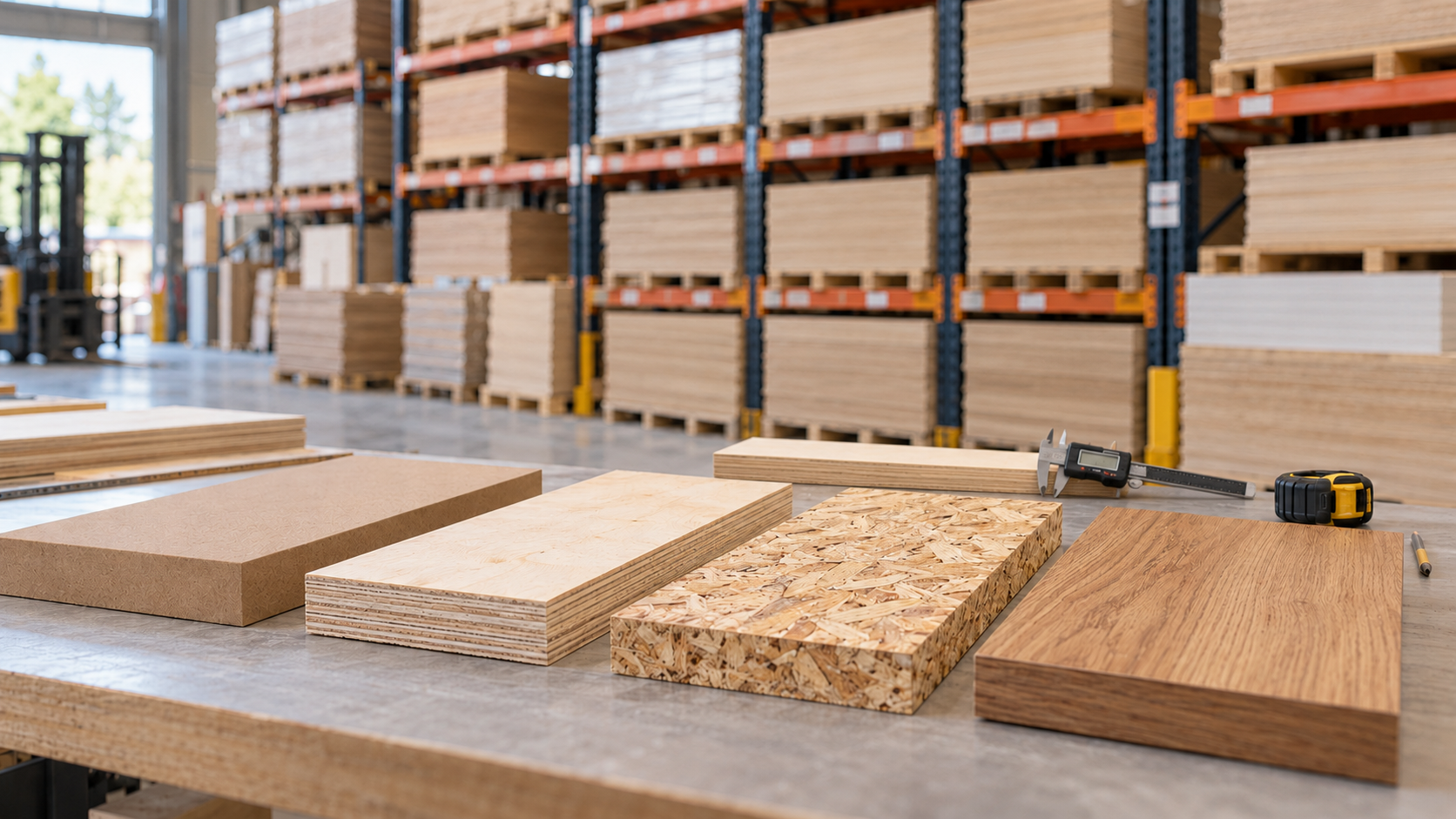
When purchasing wood panels, price and sheet size are not the only factors to consider. Two panels may appear identical, but they may perform differently in cutting, painting, assembly, or daily use. As a result, a low purchase price may result in more waste, extra labor, and customer complaints.
For furniture manufacturers, importers, and project purchasers, clear specifications are key to avoiding these problems. It also allows suppliers’ quotations to be compared more easily.
This wood panel procurement checklist covers 15 key points to confirm before placing an order. You can use it as a practical guide for purchasing wood-based panels, including MDF, plywood, OSB, particleboard, and decorative panels.
1. Panel type and intended use
First, clarify the purpose of the panels. Different uses such as painted cabinet doors, warehouse shelves, and wall cladding panels have different requirements.
MDF is often suitable for smooth painted surfaces and carved designs. Plywood may be suitable for applications where its layered structure provides good strength. OSB, depending on its grade, is commonly used in construction, packaging, and other fields.
Be sure to state the intended use in your inquiry. This gives the supplier a clear basis for recommending the appropriate product.
2. Product grade and applicable standards
A product name alone is not enough to determine its performance. Terms such as "premium," "commercial grade," or "export quality" require clear definitions.
Please inquire about the exact grade, applicable standards, and supporting technical data. At the same time, confirm whether the board is intended for structural or non-structural use.
For any OSB buying guide, this distinction is very important. Panels suitable for decorative furniture are not necessarily suitable for load-bearing building applications.
3. Length and width of the sheet
Please confirm the required sheet size in millimeters. Then, check whether standard or custom sizes provide the best cutting yield.
For example, using a larger board can reduce joints, but if it doesn’t match your cutting plan, it may create more waste. It may also exceed the capacity of your machine or storage space.
Before ordering, please compare the sheet size with your cutting equipment, dimensions of finished parts, and handling space.
4. Thickness and thickness tolerance
Nominal thickness is only one part of the specification. You also need to agree on a tolerance range.
Small variations in thickness can affect grooves, hinges, edge banding, and panel alignment. Therefore, please inquire how the thickness is measured and where the readings are taken on the sheet.
Please include the target thickness and allowable deviation in your purchase order. Do not apply the same tolerance to all panel types without reviewing the relevant standards.
5. Density and weight
Density affects board weight, handling, and some aspects of machining. However, higher density does not automatically mean better quality panels.
When using an MDF buying checklist, please inquire about the target density range and available performance data. Then, assess whether the board is suitable for your routing, drilling, and fastening needs.
At the same time, please confirm the expected weight per sheet or per pallet. This helps you plan for freight, unloading, and warehouse handling.
6. Core material and structure
The interior of a panel deserves just as much attention as its surface.
When purchasing plywood, please confirm the core wood species, layer structure, and acceptable core defects. If gaps, overlaps, and repairs could affect your application, please inquire about them.
For MDF and particleboard, please check core consistency and edge quality. If screws are to be driven into the edges, please conduct testing on samples before mass production.
A clean veneer may hide a core that does not meet your needs.
7. Moisture content at the time of delivery
Wood-based panels are sensitive to humidity changes. Therefore, please agree on a suitable moisture content range based on the panel type, destination, and intended use.
Please inquire when the moisture content will be tested and what measurement method will be used. In addition, please discuss storage and conditioning requirements prior to processing.
There is no single ideal moisture content range that applies to all orders. Your factory conditions and destination climate should be used to guide your requirements.
8. Moisture resistance and glue bond quality
Moisture content and moisture resistance are two different specifications.
A dry board may still not be suitable for humid environments. Likewise, moisture-resistant MDF should not be considered waterproof.
Please confirm the intended exposure conditions and request the relevant test results. For plywood, please check the glue bond classification. For other panels, please inquire about thickness swelling and any additional moisture-related performance requirements.
At the same time, please discuss edge sealing and finishing, as these can affect performance in use.
9. Strength and fastener performance
Align performance requirements with finished products.
Shelves may require testing for flexural strength and long-term sag resistance. Cabinets may require reliable screw-holding strength. Structural panels require performance to suit the design and applicable building requirements.
Where applicable, please request data on flexural strength, stiffness, internal bond strength, and screw-holding power.
Then, test the board using your actual hardware and assembly methods. Laboratory data alone may not fully reflect the performance of your finished product.
10. Surface grade and quality
Define acceptable surface quality before shipment.
For plywood, please confirm the grades of the front and back surfaces, as well as acceptable knots, patches, and repairs. For MDF, please check the smoothness, sanding quality, and visible marks.
If the panel is to be painted or laminated, please test the intended finish on a sample. Otherwise, surface defects may only become visible after processing.
Please agree on visual acceptance limits for scratches, stains, chipping, and other defects.
11. Decorative finish and color consistency
For laminated panels, please confirm the décor code, texture, gloss level, and finish on each side. At the same time, please specify whether matching edge banding is required.
Woodepot lists melamine-faced particleboard collections with wood grain, metallic, stone, and fabric effects, offering buyers a variety of decorative options.
Use the approved physical sample as the color reference. Screenshots can vary, and lighting can affect the appearance of the finish.
For repeat orders, please agree on acceptable color variation between batches.
12. Machining and finishing compatibility
A useful MDF buying checklist should include production trials.
Please check the performance of the samples during cutting, drilling, routing, sanding, and edge banding. If you plan to paint or laminate, please test the entire process, including adhesives and curing conditions.
For plywood and OSB, also assess edge chipping and the appearance of exposed edges.
Short trials can identify problems before they affect your entire container of materials.
13. Emissions and required documentation
Please inquire about the emission standards applicable to the destination market and the finished product.
Then, please request documentation that matches the exact panel being purchased. Please verify the manufacturer, product description, thickness range, testing method, and report date.
Do not assume that different emission standards use the same limits or testing methods. Likewise, please confirm any procurement certifications required by your customers.
Please keep these documents associated with the order so that your team can retrieve them at a later date.
14. Fire performance (where required)
For projects with fire safety requirements, please confirm the required fire rating before selecting a panel.
Woodepot lists fire-retardant MDF among its products. However, buyers should still request evidence for the specific product and intended use.
Please check whether the report covers the supplied thickness, surface finish, and installation conditions. Panel testing may not represent the performance of a complete wall or ceiling system.
Also, do not use core color as proof of fire performance.
15. Packaging, labeling, and batch traceability
Finally, please specify how the panels must be delivered.
Please confirm the number of sheets per pallet, pallet dimensions, protective coverings, corner protection, and strapping. Where applicable, please discuss moisture protection and container loading.
Labels should identify the product, size, grade, quantity, and batch. This makes receiving inspections easier and helps in tracking any quality issues.
Prior to shipment, please agree on inspection methods, defect tolerance limits, and the process for reporting damage or non-conforming goods.
Transform your wood panel procurement checklist into a clear order
Once specifications are agreed upon, compile them into a single written document. Attach the approved sample reference, required reports, and packaging instructions.
Next, compare quotations on a consistent basis. Please check quantity, delivery terms, lead time, and what is included in the price. After considering cutting waste, freight, or rejected parts, a cheaper sheet may ultimately cost more.
For first-time orders, please consider sample approval or trial batches before scaling up production.
Discuss your wood-based panel requirements with Woodepot
Woodepot's website lists options for MDF, plywood, OSB, particleboard, and decorative panels. It also encourages buyers to share their purchasing needs for customized quotations and supply chain support.
Before contacting the team, please prepare your application, destination, dimensions, quantity, and performance requirements. Then, use this checklist to confirm the details behind each quotation.
Visit Woodepot to discuss suitable panel options for your next furniture, interior, or supply chain project.


