How Custom Panel Sizes Help Reduce Waste in Furniture and Interior Projects
News Details
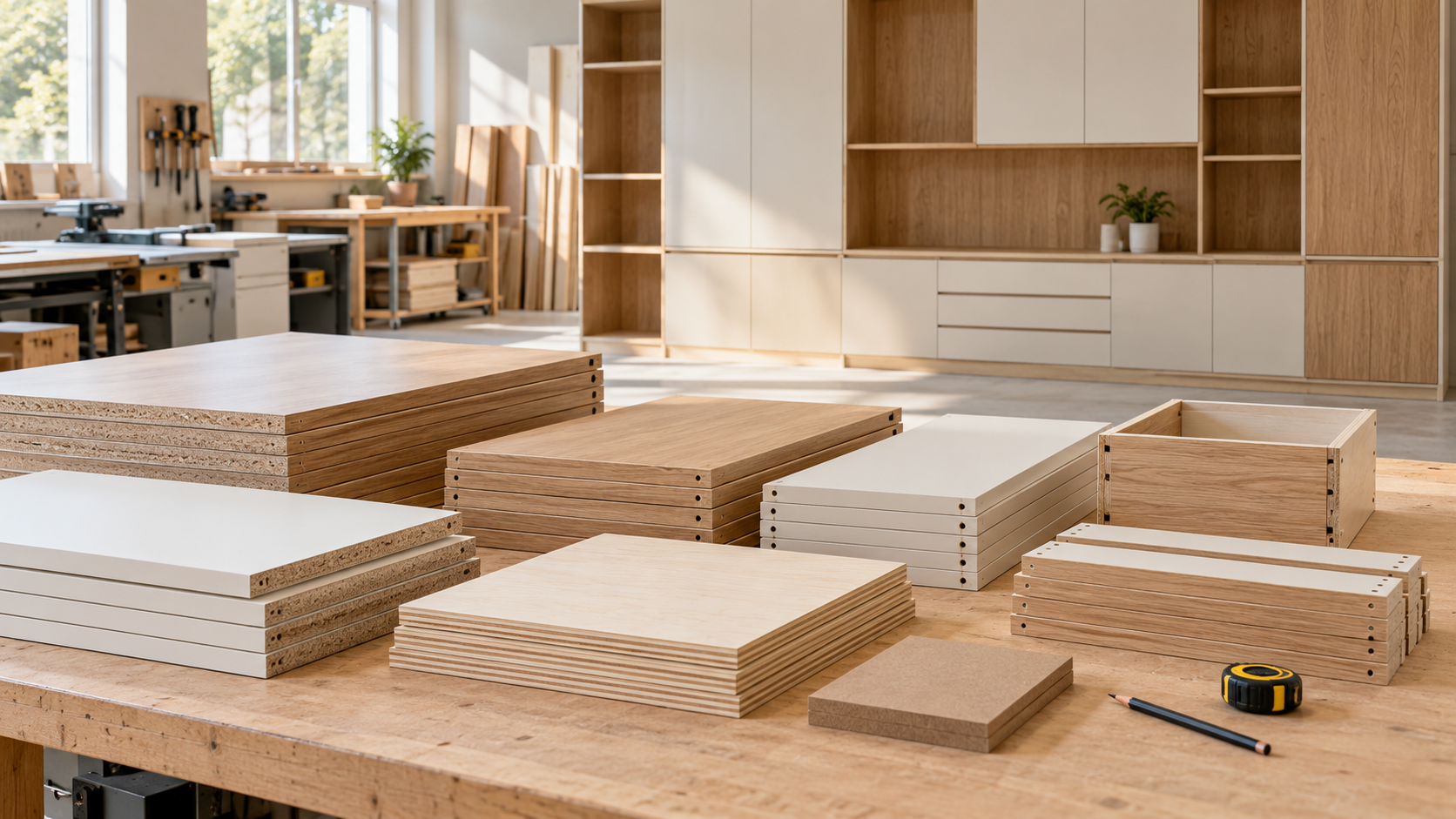
A standard wood panel may offer a good price per sheet. However, it may leave large offcuts after cutting. Across a full order of cabinets, wardrobes or wall panels, those leftovers can add up.
Choosing panel sizes around your project can help. When sheet dimensions match the parts you need, you may get more finished pieces from the same amount of material. You can also reduce cutting, handling and scrap disposal.
Still, custom dimensions do not always deliver the lowest cost. The best choice depends on your cutting plan, order volume, surface design and production setup.
This guide explains how custom panel sizes reduce waste and what furniture makers, interior contractors and importers should check before ordering.
How Custom Panel Sizes Reduce Waste
Panel waste often starts with a mismatch between the purchased sheet and the finished parts.
For example, a cabinet factory may need many panels with the same width. If that width fits poorly across a standard sheet, each cut leaves a narrow strip. These strips may be too small for other products.
A better sheet width can reduce those leftovers. Likewise, a different sheet length may allow an extra row of parts.
However, the cutting plan must include more than the finished dimensions. Saw blade width, edge trimming and machining allowances all use material. Therefore, a useful layout shows the actual space each part needs.
Start Furniture Panel Waste Reduction with a Complete Cut List
Before choosing custom dimensions, prepare a clear cut list. Include:
- Part name and quantity.
- Finished length, width and thickness.
- Material type and grade.
- Surface finish and grain direction.
- Edge banding and machining requirements.
- Any extra allowance needed before final trimming.
Next, group parts that share the same material, thickness and finish. This may let you combine large and small components in one cutting layout.
For example, smaller drawer parts may fit beside larger cabinet panels. As a result, material that would become scrap can become a useful component.
Update the cut list before confirming an order. Late design changes can remove the benefit of a carefully planned sheet size.
Cut to SizeMDF Boardfor Repeat Furniture Parts
A cut to size MDF board can be useful for repeat parts such as cabinet doors, shelves, drawer fronts and decorative panels.
Instead of buying full sheets and completing every cut in-house, buyers may source blanks closer to the required dimensions. This can reduce work at the receiving factory and make parts easier to handle.
However, “cut to size” needs a clear definition. It may mean rough blanks with extra material for final machining, or finished parts ready for the next process.
Confirm the following before ordering:
- Whether dimensions refer to blanks or finished parts.
- Cutting tolerances and squareness.
- Allowances for sanding, routing or trimming.
- Whether edge banding changes the final size.
- How cut edges and corners will be protected.
Also, test the MDF grade for the intended finish. A well-sized blank still needs suitable surface quality and machining performance.
Optimized Plywood Sizes Must Account for Grain and Face Grade
Optimized plywood sizes can improve material use in furniture, partitions and interior joinery. Yet a layout that looks efficient on paper may not meet the project’s visual or performance needs.
First, check grain direction. Rotating a part may improve yield, but it can change the finished appearance. For structural applications, panel orientation must also follow the design requirements.
Next, identify visible faces. A cabinet side or exposed shelf may need a different face grade from a hidden backing panel.
Keep these requirements in the cutting plan. Otherwise, a high-yield layout may produce parts that cannot be used where intended.
Ask for sample cuts when edge appearance matters, especially for furniture with exposed plywood layers.
Custom Laminate Panels Need a Planned Surface Layout
For custom laminate panels, waste reduction involves both the core board and the decorative surface.
Wood grain, stone effects and other directional designs may need to align across doors or wall sections. Therefore, parts cannot always be rotated or placed anywhere on a sheet.
Plan the visible layout before cutting. Mark the face, top edge and installation sequence where needed.
Woodepot lists melamine-faced chipboard collections with wood grain, metallic, stone and fabric effects. These options give buyers different surfaces to consider for furniture and interior projects. www.woodepot.cn
When discussing decorative panels, confirm whether the order involves melamine-faced boards or a separately bonded laminate. Also, check the reverse-side finish, matching edge banding and acceptable colour variation.
Compare Cutting Yield Before Choosing a Panel Size
Cutting yield measures how much purchased panel area becomes usable parts.
A simple calculation is:
Cutting yield = usable part area ÷ purchased panel area × 100
For illustration, suppose a project needs 100 square metres of finished parts. At 80% yield, it requires 125 square metres of purchased board. At 90% yield, it requires about 111.1 square metres.
That difference is about 13.9 square metres of board. However, these figures are only an example. Actual results depend on part sizes, cutting allowances, defects and production methods.
Compare several layouts before choosing. A standard sheet with a better cutting plan may outperform a custom sheet with a poor one.
Check Total Cost, Not Just Material Savings
Custom dimensions may reduce scrap while adding costs elsewhere.
For example, a special sheet size may carry a higher price or minimum order quantity. Supplier cutting, protective packing and extra freight space may also affect the total.
Compare these costs together:
| Cost area | What to check |
|---|---|
| Panel purchase | Price, minimum order and usable yield |
| Processing | Cutting, setup, sorting and machining time |
| Transport | Pack size, loading efficiency and delivery cost |
| Storage | Rack space and ease of handling |
| Quality | Damage, rejected parts and replacement costs |
| Scrap | Reuse value and disposal cost |
This gives a clearer picture than price per sheet alone.
Fit Custom Panel Sizes to Your Equipment and Delivery Plan
Larger sheets can improve yield, but only if your factory can process them.
Before ordering, confirm the limits of your saws, CNC tables, lifting equipment and storage racks. Also, check access through doors and unloading areas.
Smaller cut panels bring different challenges. They may need more sorting and stronger corner protection. Therefore, agree on part labels and packing order.
For interior projects, packing by room or installation stage may reduce searching and repeated handling. Include a small, planned replacement allowance where damage or site adjustments are likely.
Confirm Custom Panel Options with Woodepot
Woodepot’s website lists MDF, plywood, OSB, particle board and decorative panel options. It also invites B2B buyers to share purchasing requirements for tailored quotes and supply chain support.
To discuss a project, prepare your cut list, required quantity, material grade, finish and delivery destination. Then ask which sheet dimensions or cutting options are available for the selected product.
Confirm minimum quantities, tolerances, lead times and packing before placing the order. Availability may vary by panel type and manufacturer.
Make Furniture Panel Waste Reduction Part of Project Planning
Custom sizes work best when they are considered early. Start with the finished parts, build a realistic cutting layout and compare the full cost of each option.
Whether you need cut to size MDF board, optimized plywood sizes or custom laminate panels, the aim is the same: turn more purchased material into usable products.
Visit Woodepot to discuss panel requirements for your next furniture or interior project.


