Wood Panel Container Loading & Shipping Cost Guide: How Thickness, Size, and Packaging Impact Logistics Fees
Discover how thickness, dimensions, and packing methods affect your wood panel shipping costs. Optimize container loading for MDF, plywood, OSB, and particle board.
2026/11/05
Reading volume: 0
News Details
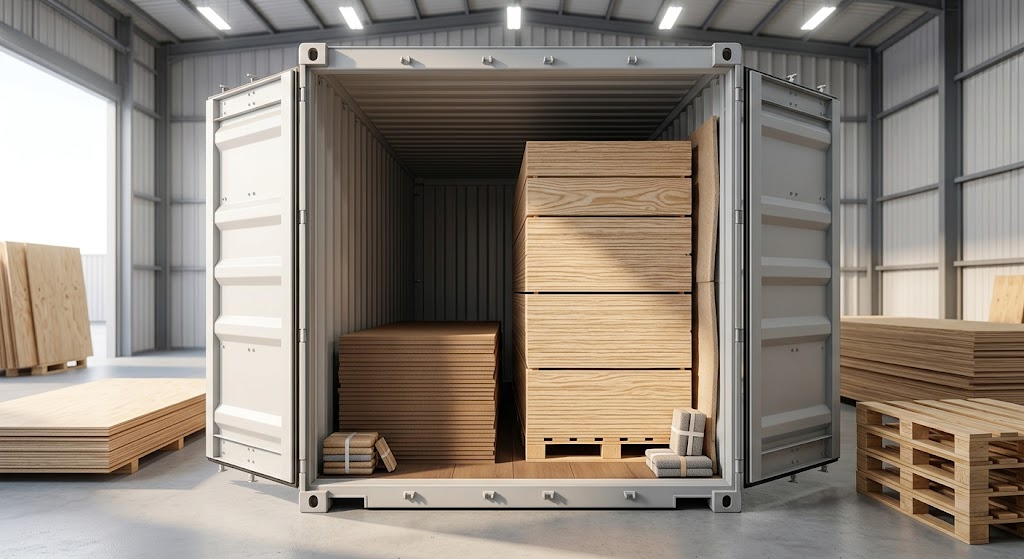
Shipping wood panels across international borders involves far more than just ordering raw materials. Freight rates, fuel surcharges, and port handling fees add up quickly. Therefore, understanding your total wood panel shipping cost is vital for maintaining profitable margins in global trade.
Freight forwarders charge by volume or weight, meaning every inch of space inside a ocean container matters. By adjusting board thickness, sheet dimensions, and bundle packaging, manufacturers can load significantly more cargo into every shipment. This guide explains how to optimize container space, reduce shipping costs, and protect your boards during transit.
1. Understanding Container Capacity: Weight vs. Volume
When shipping engineered wood panels, freight efficiency usually boils down to two constraints: volume limits (cubic meters) or weight limits (payload weight).
Cubic Volume (Cubing Out)
Standard shipping containers—such as 20-foot and 40-foot High Cube (40HC) units—have fixed internal dimensions. Light or thin materials often fill up the entire space before reaching the weight ceiling.
Weight Limits (Weighing Out)
Engineered wood panels are dense. For instance, high-density panels like MDF can weigh down a container quickly. As a result, containers often hit their legal road weight limit before the interior space is completely filled.
2. How Board Thickness Affects Quantity
Panel thickness determines how many sheets fit onto a single pallet and into a container. Even small variations in thickness can change your total unit count per shipment.
MDF and Particle Board Densities
-
Medium-Density Fiberboard (MDF): Dense fibers make MDF heavy. Consequently, when planning MDF container loading, weight limits are typically reached before the container is full. Choosing optimized thicknesses helps balance total sheet count with weight limits.
-
Particle Board: Particle board is slightly lighter than MDF, but particle board export packing requires protective covers and strong strapping to prevent edge crumbling.
Plywood and OSB Efficiencies
-
Plywood: Plywood offers a strong strength-to-weight ratio. As a result, plywood shipping cost per sheet is often lower because more sheets fit within weight limits.
-
Oriented Strand Board (OSB): OSB is popular for construction and packaging. Calculating your exact OSB container quantity helps maximize cargo capacity while avoiding overweight port fines.
3. Sheet Size and Container Dimensions
Standard panel sizes affect how neatly bundles fit inside shipping containers:
-
Standard 4x8 Feet (1220 x 2440 mm): Fits standard ocean containers smoothly, leaving optimal room for side protective padding and fork clearance.
-
Oversized Panels (e.g., 5x10 Feet or Custom Lengths): Require precise container layout planning. Poorly sized panels create awkward dead space that inflates your shipping costs.
4. Packaging and Palletization Strategies
Proper export packaging protects wood panels from damage while ensuring tight, efficient stacking.
Bundle Heights and Stacking
Customizing bundle heights based on container door dimensions prevents wasted vertical space. Stacking pallets tightly eliminates shifting during ocean transport.
Protective Materials
Export bundles use top covers, corner protectors, and bottom skid runners. Using slim yet sturdy runner materials saves precious vertical inches, allowing extra panel sheets in every stack.
5. Panel Type Comparison for Container Shipping
Use this table to evaluate panel characteristics and packaging requirements:
| Panel Type | Average Density | Primary Loading Limit | Key Packaging Needs |
| MDF | High (700–800 kg/m³) | Weighs Out Early | Corner guards, bottom skids |
| Particle Board | Medium (650–750 kg/m³) | Volume / Weight Balanced | Edge protection, plastic wrap |
| Plywood | Medium-Low (500–650 kg/m³) | Volume (Cubes Out) | Moisture barriers, steel strapping |
| OSB | Medium (600–700 kg/m³) | Volume / Weight Balanced | Sealed edges, sturdy pallets |
Optimize Your Panel Shipments with Woodepot
Managing international shipping costs requires the right balance of material selection,bundle sizing,and packaging design.Working with an experienced panel supplier ensures your containers are loaded safely and cost-effectively.
Woodepot helps global buyers streamline panel sourcing and container logistics. From certified plywood and particle board to custom-cut MDF, Woodepot optimizes packaging layouts so you get maximum board volume in every shipment. Contact the Woodepot team today to plan your next export order!
Share to:


Choosing Wood Panels for Export Furniture: Cost, Compliance, and Durability


