Decorative Laminate Panels in Renovation Projects: Why Speed and Consistency Matter
News Details
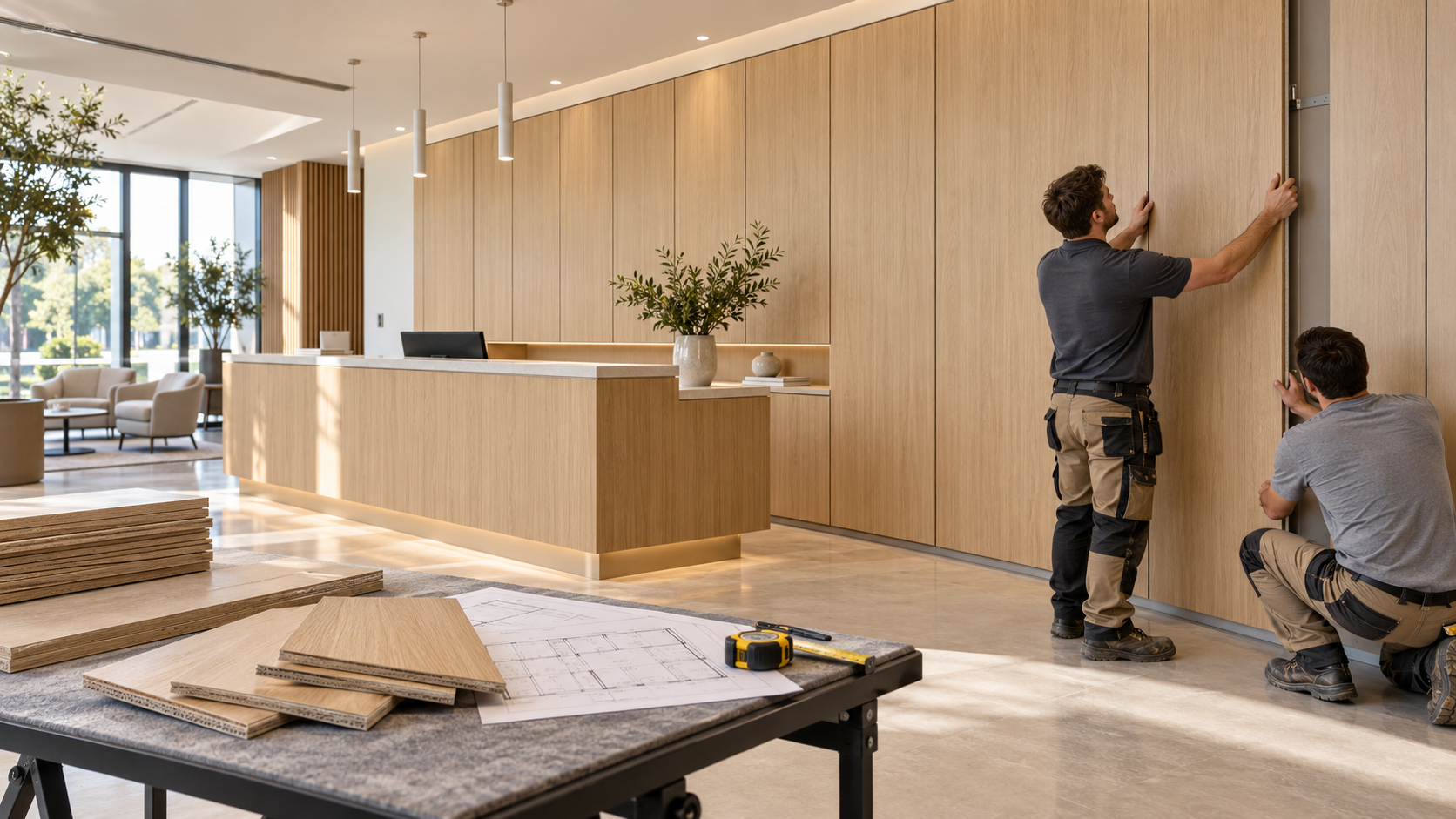
Renovation projects often run on tight schedules. A shop needs to reopen. A hotel needs rooms ready for guests. An office needs to welcome staff back. In each case, delays can affect more than the building work.
At the same time, the finished space must look well planned. Cabinet doors, wall panels, and counters should follow the approved design. A fast delivery offers little value if the panels arrive with the wrong finish or do not match nearby surfaces.
That is why speed and consistency deserve equal attention when buying decorative laminate panels. For contractors, furniture makers, and purchasing teams, the goal is simple: get suitable panels on time, with clear specifications that support a consistent result.
What Are Decorative Laminate Panels?
Decorative laminate panels combine a decorative surface with a supporting board. Depending on the product, the core may be MDF, particleboard, or plywood. Surface options can include woodgrain patterns, solid colors, and textured finishes.
However, suppliers may use similar product names for different constructions. A ready-faced board and a separate laminate sheet that needs bonding are not the same purchase.
Therefore, buyers should confirm exactly what is being offered. Ask about the surface type, core material, overall thickness, and whether one or both faces are finished.
These details affect how the panel fits into the production and installation plan. They also help prevent price comparisons between products with different specifications.
Why Speed Matters in Renovation Work
Renovation tasks depend on one another. A team may need finished wall panels before fitting trim. Cabinet installers may need approved boards before they can complete storage units.
If materials arrive late, other work may need to move. This can create extra site visits, idle time, or changes to the opening date.
Speed, however, involves more than transport. Buyers need to account for sample approval, stock checks, production, cutting, packing, and delivery.
A supplier’s quoted lead time may start only after the final specification is approved. As a result, buyers should confirm both the duration and the starting point.
Early decisions on color, thickness, and quantity can help keep the schedule realistic.
How Finished Surfaces Can Simplify the Work Plan
Panels supplied with the specified decorative face already applied can reduce the surface-finishing tasks required later. This may help teams plan fabrication and installation with fewer finishing steps on site.
Even so, a finished face does not mean a panel is ready for every application. Cutting, drilling, edge treatment, and fitting may still be needed.
For that reason, buyers should define the supply scope before ordering. Will the panels arrive as full sheets, cut parts, or finished components? Who will handle exposed edges? Are matching edge materials included?
Clear answers help purchasing and installation teams work from the same plan. They also reduce the chance of discovering missing materials just before fitting begins.
Why Consistency Matters Across the Finished Space
A finish that looks suitable on one sample may look different when repeated across a large wall or a row of cabinets.
Color, texture, gloss, and pattern direction all affect the final appearance. Differences can be more noticeable when panels sit side by side or under strong lighting.
Consistency also applies to dimensions. Buyers need agreed thicknesses, sizes, and tolerances so that parts can be made and fitted as planned.
Therefore, “the same color” is not a complete specification. Record the supplier’s decor code, surface texture, gloss level where relevant, core type, and finished thickness.
An approved sample gives both sides a reference. It should be linked to the written specification rather than treated as a substitute for it.
Check Samples in the Actual Project Setting
Online photos help buyers narrow their choices. However, screens and photography can change how a finish appears.
Before approving a large order, review physical samples under lighting similar to the finished space. Place them beside flooring, paint, metal fittings, and other nearby materials.
For woodgrain designs, check the intended grain direction. For a large feature wall, ask whether a larger sample or trial layout is available.
It is also useful to check the face and edge together. A suitable panel with a poorly matched edge may not deliver the intended look.
Finally, label the approved sample with its product code and approval date. Keep it available for checks during fabrication and delivery.
Choose the Core for the Intended Use
The decorative face is only one part of the panel. The core also needs to suit the application, fixing method, and working conditions.
For example, buyers comparing options for cabinet parts should explain how the boards will be cut, drilled, and assembled. For areas exposed to humidity or occasional splashes, they should ask for a product suitable for those conditions.
A decorative surface alone does not prove that the complete panel is waterproof or suitable for every location.
If you need to find an MDF supplier, include the required surface, core grade, and end use in your inquiry. Likewise, when reviewing a plywood supplier online, confirm the complete panel construction rather than relying on the appearance of the face.
Plan Repeat Orders Before the First Delivery
Renovations may take place in stages. A hotel might update one floor at a time, while a retailer may use the same design across several stores.
In these cases, finish availability matters beyond the first order.
Ask whether the chosen decor is a regular product or a special-order option. Also, discuss how later orders will be checked against the approved reference.
Where adjacent panels need a close visual match, ask whether the required quantity can be supplied from one batch. Do not assume that a matching product name guarantees an identical appearance across all deliveries.
An allowance for cutting waste, damaged parts, and future repairs can also help. Base that allowance on the cutting plan and project needs.
Balance Fast Supply With Clear Quality Checks
Urgent schedules can tempt buyers to approve the first available product. Yet a substitution may change the finish, thickness, core, or fabrication needs.
Before accepting an alternative, compare it against the original specification. Confirm any effect on matching edges, fittings, and installation.
A practical pre-dispatch check can cover:
-
Product and decor codes
-
Panel dimensions and quantities
-
Visible surface condition
-
Edge materials and accessories
-
Packing labels and project references
For staged work, labels should help the receiving team identify the correct room, floor, or installation area.
These checks support speed by reducing confusion when the shipment arrives.
Build a Clear Quote Request
Effective B2B wood panel sourcing starts with a request that suppliers can price accurately.
Include the following details:
-
Project type and intended applications
-
Surface code, color, and texture
-
Core material and finished thickness
-
Sheet sizes or cut-part dimensions
-
Quantities and grain direction
-
Edge treatment requirements
-
Sample approval needs
-
Delivery destination and required date
Also, state whether partial deliveries are useful and whether alternatives are acceptable.
Ask suppliers to separate confirmed availability from estimated lead times. This gives the project team a clearer basis for planning and makes quotations easier to compare.
Prepare Your Renovation Inquiry With Woodepot
Successful renovation sourcing brings appearance, timing, and practical details together. Buyers need more than a fast shipment or an attractive sample. They need an agreed product, a realistic schedule, and a clear way to check the delivery.
If you are considering Woodepot for your project, visit Woodepot and prepare a detailed inquiry with your drawings, finish references, quantities, and target dates.
By confirming these details early, you can make better sourcing decisions and help keep the finished space consistent with the approved design.


